
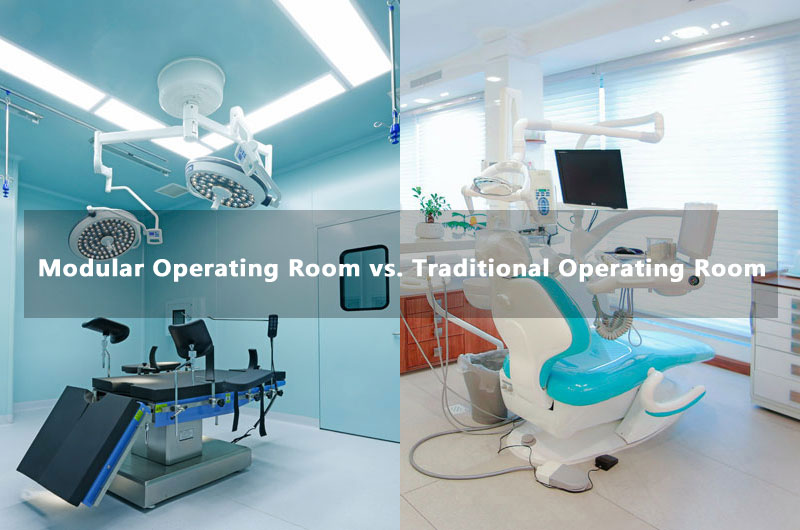
Over the years, hospitals have moved from conventional construction methods toward more advanced solutions, giving rise to modular operating rooms.
Both modular operating rooms and traditional operating rooms provide a sterile and controlled environment for surgical procedures—but they differ significantly in construction method, flexibility, installation time, and maintenance requirements.
This article compares these two types of operating rooms in detail to help healthcare planners, hospital administrators, and facility designers understand their differences.
What Is a Traditional Operating Room?
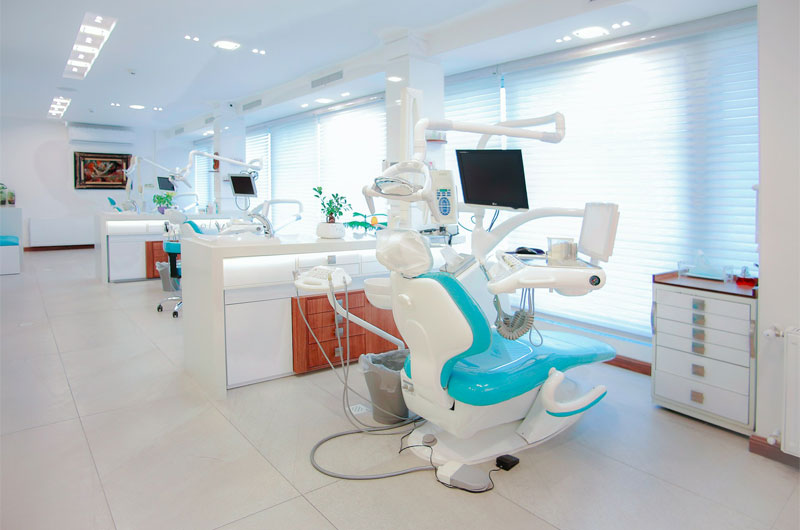
A traditional operating room is constructed using conventional building methods, similar to other hospital departments. It is built on-site using masonry walls, cement plaster, tiles, and standard building materials.
Construction Method
Traditional ORs are built as part of the hospital’s permanent structure. The process typically includes:
- Brick or concrete walls
- Cement plaster finishing
- Ceramic tile or epoxy wall coatings
- Conventional ceiling systems
- Fixed electrical and medical gas installations
Each component is constructed sequentially by different contractors, which often results in a longer construction timeline.
Characteristics of Traditional Operating Rooms
Traditional ORs usually feature:
- Permanent structural walls
- Standard hospital finishes
- Fixed layouts
- Limited ability to modify infrastructure
Once constructed, making structural changes to the operating room can be difficult and expensive.
Advantages of Traditional Operating Rooms
- Lower Initial Material Cost: Conventional materials such as bricks, cement, and tiles are widely available and relatively inexpensive.
- Familiar Construction Process: Most contractors are experienced with traditional building techniques.
- Suitable for Small Facilities: Smaller hospitals or clinics with limited budgets may prefer this approach.
Disadvantages of Traditional Operating Rooms
- Long Construction Time: Building a traditional OR can take several months due to sequential construction processes.
- Difficult Renovation: Any upgrades or modifications require demolition and reconstruction.
- Higher Risk of Infection Harboring: Cracks, joints, and uneven surfaces can trap bacteria and dust.
- Limited Flexibility: Once installed, equipment placement and layout are difficult to change.
What Is a Modular Operating Room?
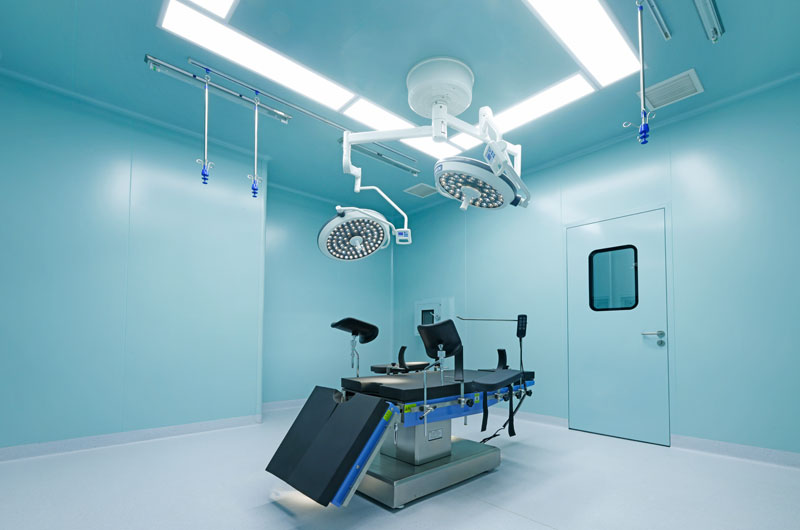
A modular operating room is a prefabricated surgical suite constructed using standardized panels and components manufactured in a factory and assembled on-site.
Instead of building walls and systems piece by piece, modular OR systems use pre-engineered components designed specifically for surgical environments.
Construction Method
The modular OR system is composed of several prefabricated elements, including:
- Wall panels
- Ceiling systems
- Integrated service panels
- Medical gas pipelines
- Electrical systems
- Laminar airflow units
These components are prefabricated in controlled factory environments and rapidly installed at the hospital site.
Characteristics of Modular Operating Rooms
Modular operating rooms are known for:
- Prefabricated panel construction
- Smooth, seamless surfaces
- Integrated surgical utilities
- Flexible design and expansion options
The modular design allows the entire operating suite to be assembled much faster than traditional construction.
Advantages of Modular Operating Rooms
- Rapid Installation: Because most components are prefabricated, installation can be completed in weeks rather than months.
- Superior Infection Control: Modular ORs use smooth, joint-free panels that prevent microbial accumulation and make cleaning easier.
- Flexibility and Scalability: Panels and components can be removed or replaced, allowing hospitals to upgrade equipment or reconfigure layouts without major demolition.
- Integrated Systems: Lighting, medical gases, electrical outlets, and control panels are integrated into wall systems for better organization and safety.
- Reduced Construction Disruption: Since much of the manufacturing occurs off-site, there is less noise, dust, and disruption inside the hospital.
- Future-Proof Design: Hospitals can upgrade technology without rebuilding the entire operating room.
Disadvantages of Modular Operating Rooms
- Higher Initial Investment: Prefabricated systems and specialized materials often have a higher upfront cost compared with conventional construction.
- Dependence on Specialized Suppliers: Hospitals must work with manufacturers experienced in modular OR systems.
- Design Standardization: Although customizable, modular systems may have certain dimensional or design limitations compared to fully custom-built structures.
Key Differences Between Modular and Traditional Operating Rooms
Understanding the differences between these two approaches helps healthcare facilities choose the best option for their needs.
1. Construction Time
Traditional OR
- Construction may take 3–6 months or longer
- Sequential construction stages slow the process
Modular OR
- Installation typically completed within 3–6 weeks
- Prefabricated components significantly shorten project timelines
For hospitals expanding surgical capacity quickly, modular systems offer a major advantage.
2. Infection Control
Traditional OR
- Tile joints and cracks may harbor bacteria
- Surfaces may degrade over time
Modular OR
- Seamless wall panels help minimize the risk of contamination
- Materials are designed for medical-grade hygiene
This makes modular ORs particularly suitable for high-sterility surgical environments.
3. Flexibility and Upgradability
Traditional OR
- Structural walls make upgrades difficult
- Major renovation required for layout changes
Modular OR
- Panels can be removed and reconfigured
- Equipment integration can be upgraded easily
Hospitals planning long-term expansion often prefer modular solutions.
4. Maintenance
Traditional OR
- Repair often requires plastering, repainting, or tile replacement
- Maintenance may disrupt hospital operations
Modular OR
- Damaged panels can be replaced individually
- Minimal downtime during maintenance
5. Cost Considerations
Traditional OR
- Lower initial construction cost
- Higher long-term renovation costs
Modular OR
- Higher upfront cost
- Lower lifetime maintenance and upgrade costs
Over time, modular ORs often prove more economical due to reduced renovation and downtime.
6. Construction Environment
Traditional OR
- On-site construction generates dust and debris
- May interfere with hospital operations
Modular OR
- Factory manufacturing reduces on-site work
- Cleaner and safer installation process
This is especially important for hospitals that must remain operational during construction.
Modular vs Traditional Operating Room Comparison Chart
| Aspect | Modular Operating Room | Traditional Operating Room |
|---|---|---|
| Construction Method | Prefabricated panels and systems assembled on-site | Built on-site using bricks, cement, plaster, and tiles |
| Installation Time | Fast installation (typically 3–6 weeks) | Long construction period (often 3–6 months or more) |
| Design Structure | Panel-based modular structure | Permanent structural walls |
| Flexibility | Highly flexible and easily reconfigurable | Limited flexibility once constructed |
| Upgradability | Easy upgrades by replacing panels or modules | Requires demolition and reconstruction |
| Infection Control | Smooth, seamless surfaces reduce bacterial growth | Tile joints and cracks may harbor bacteria |
| Maintenance | Damaged panels can be replaced individually | Repairs may involve plastering, repainting, or tile replacement |
| Construction Environment | Minimal on-site disruption due to off-site manufacturing | Dust, noise, and debris during construction |
| System Integration | Integrated electrical, medical gas, and control systems | Systems installed separately during construction |
| Initial Cost | Higher upfront investment | Lower initial construction cost |
| Long-Term Cost | Lower maintenance and upgrade costs | Higher renovation and maintenance costs |
| Project Scalability | Easily expandable with additional modules | Expansion requires major construction |
| Suitability | Ideal for modern hospitals and expandable surgical centers | Suitable for smaller facilities or limited budgets |
Applications of Modular Operating Rooms
Modular operating rooms are increasingly used in modern healthcare facilities, including:
- Large hospitals
- Specialty surgical centers
- Emergency trauma centers
- Temporary or expandable hospital facilities
They are also ideal for hospitals undergoing rapid expansion or modernization.
When Should Hospitals Choose Modular ORs?
Modular operating rooms are recommended when hospitals need:
- Fast project completion
- High infection control standards
- Future expansion capability
- Minimal disruption to hospital operations
- Advanced surgical technology integration
Many modern hospitals adopt modular ORs as part of their long-term infrastructure strategy.
When Traditional Operating Rooms May Still Be Suitable
Despite the advantages of modular systems, traditional ORs may still be appropriate in certain situations:
- Small healthcare facilities with limited budgets
- Hospitals located in regions without modular system suppliers
- Renovations of existing conventional structures
In these cases, conventional construction may still meet operational needs.
Future Trends in Operating Room Design
The healthcare industry is increasingly moving toward modular and prefabricated medical infrastructure. Several trends are driving this shift:
- Growing demand for infection control
- Increasing need for fast hospital construction
- Integration of advanced surgical technologies
- Focus on flexible healthcare facilities
As surgical procedures become more technologically complex, operating room environments must evolve to support new equipment and digital systems. Modular OR systems provide the flexibility needed to accommodate these advancements.
Conclusion
Traditional ORs rely on conventional construction techniques and offer lower upfront costs, but they are less flexible and take longer to build.
Modular operating rooms, on the other hand, use prefabricated systems that allow for faster installation, improved infection control, and easier upgrades. Although the initial investment may be higher, their long-term efficiency and adaptability often make them the preferred choice for modern hospitals.
For healthcare facilities planning new surgical suites or upgrading existing ones, modular operating rooms represent a forward-thinking solution that aligns with the evolving needs of modern medical care.