
Modular Orthopedic Operating Room
- Our modular orthopedic operating rooms are designed for heavy equipment integration, sterile control, and high-performance surgical workflows.
- Heavy equipment compatibility
- Reinforced structural system
- Radiation protection
- Advanced infection control
- Optimized surgical workflow
- Request A Quote Now
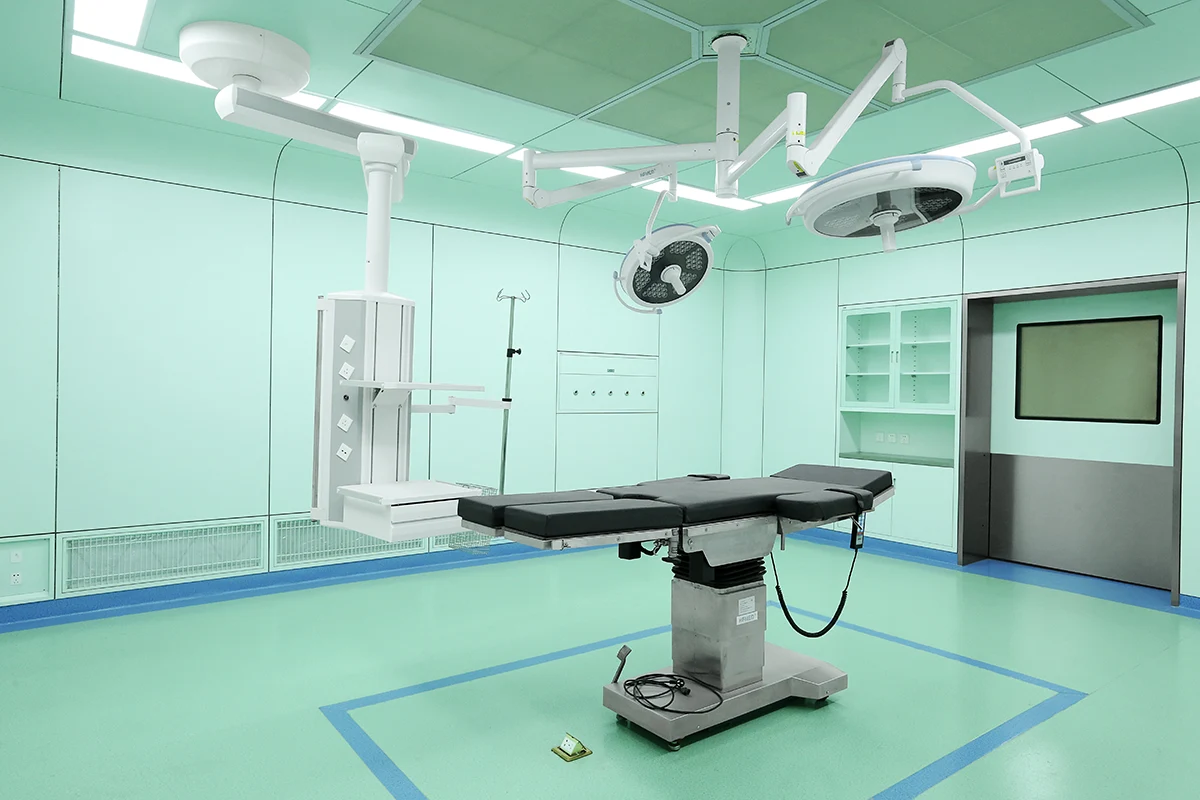
Orthopedic ORs Special Requirements
Heavy Equipment Integration
Orthopedic surgery relies on:
- C-arm / DR systems
- Orthopedic surgical robots
- Power tool systems
Therefore, they require higher load-bearing capacity and a larger spatial layout.
High Impact & Mechanical Stress
Orthopedic surgery involves the following procedures:
- Percussion, drilling, sawing
- High-frequency mechanical vibration
Materials used in conventional operating rooms are prone to deformation, loosening and cracking.
Radiation Protection
Many orthopedic procedures require real-time imaging guidance, such as:
- Fracture reduction
- Intramedullary nail insertion
- Pedicle screw placement
- Joint replacement positioning
During these procedures, fluoroscopy is frequently used, resulting in repeated exposure to ionizing radiation.
Strict Infection Control
Orthopedic implant surgeries (such as joint replacements or internal fixation) are highly susceptible to infection.
Therefore, they must meet the following requirements:
- High cleanliness standards
- Stable airflow control
Complex Workflow
Orthopedic surgery involves:
- Handling of multiple instruments
- Collaboration among multiple staff members
- A large number of sterile instruments
Therefore, they require lear zoning and efficient workflow design.
Our Orthopedic OR Solutions
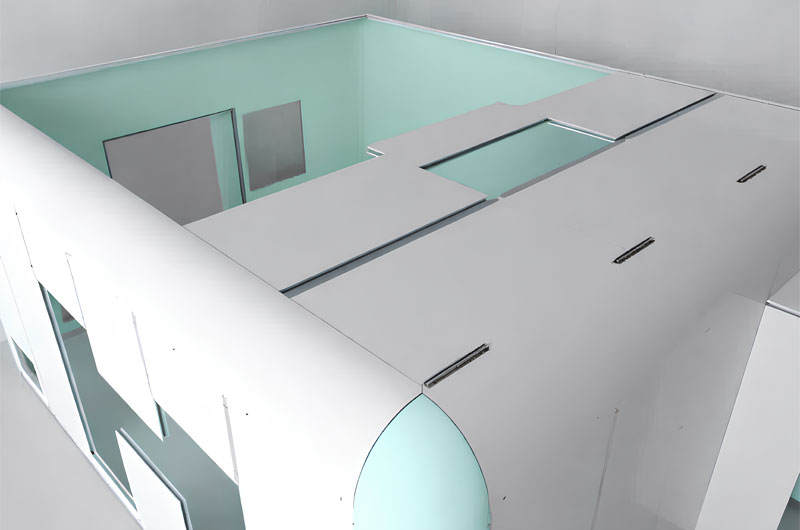
- High load-bearing wall system (suitable for large equipment).
- Reinforced ceiling structure (supports equipment hoisting).
- Floor compression and seismic design.
- Modular structure for stability and no deformation.
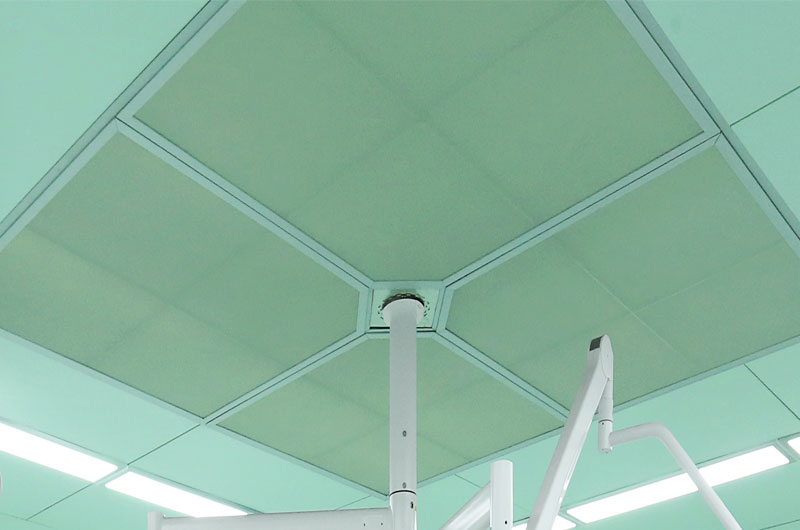
- HEPA filtration system - efficienctly removes airborne particles.
- Positive pressure control - prevents contaminated air from entering.
- Laminar airflow system - reduces the risk of implant infection.
- Stable airflow design - ensures consistent air distribution.
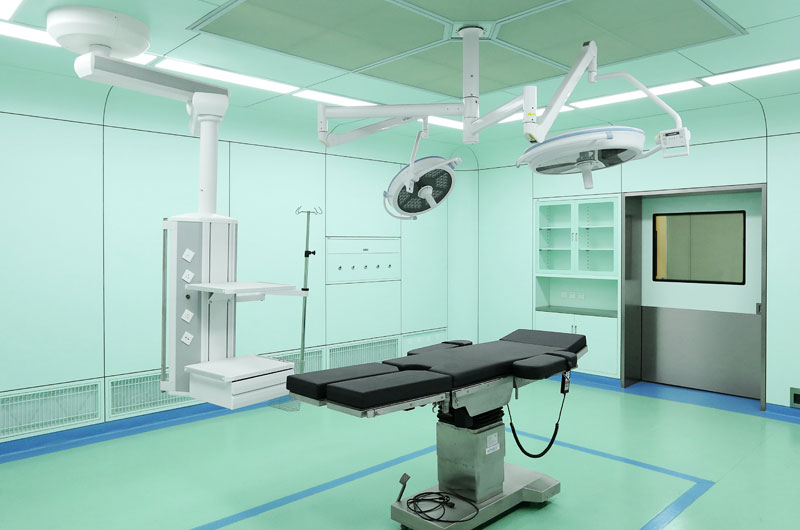
- Reserve space for C-arm operation.
- Pre-embedded surgical robot interface.
- Built-in power, data, and gas interfaces.
- Integration of surgical pendant and imaging equipment.
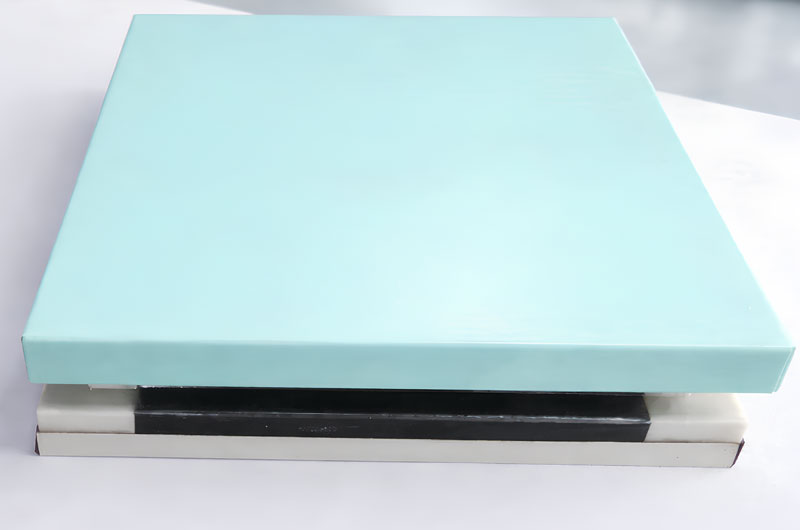
- Antibacterial electrolytic steel sheet / Hand-made cleanroom panel.
- Impact-resistant and scratch-resistant surface.
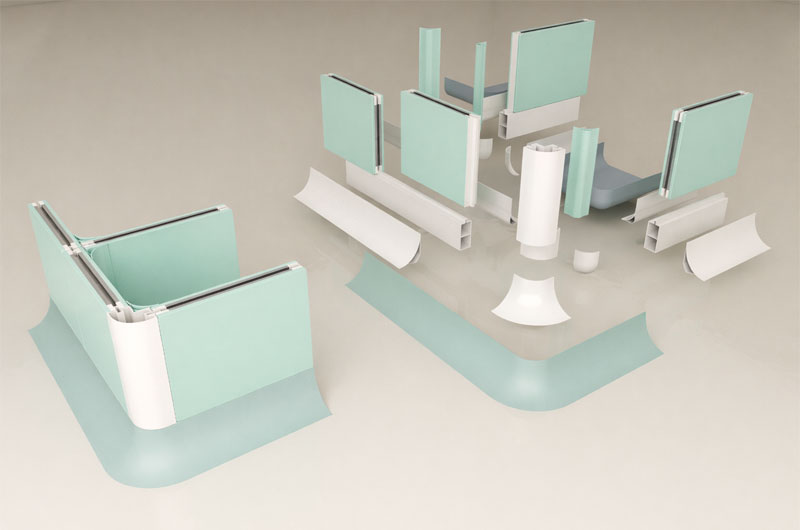
- Rounded corners + seamless splicing design.
- Resistant to high-frequency disinfection.
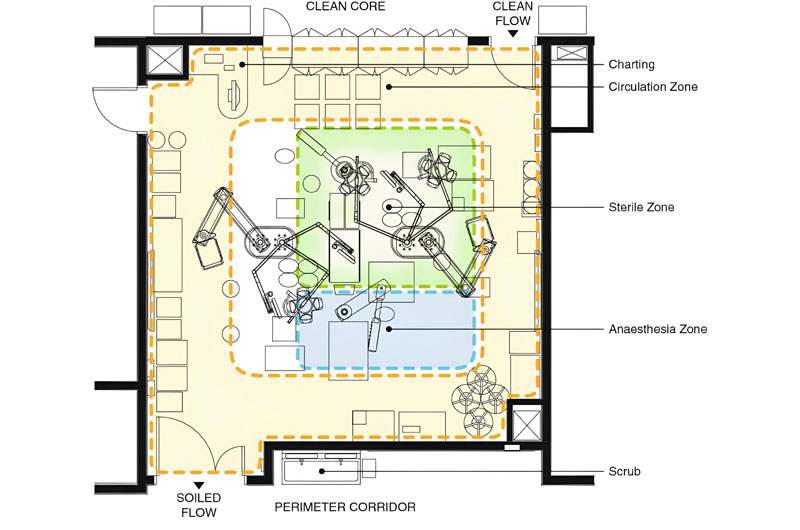
- Clean/contaminated zones separation.
- Rapid instrument transfer routes.
- Efficient movement path for medical staff.
- Reserved space for large equipment movement.
- Expand room size or add adjacent functional areas.
- Accommodate future installation of advanced orthopedic equipment.
- Can be reconfigured to adapt to evolving surgical workflows.
- Limited impact on ongoing clinical operations.
Modular Orthopedic Operating Room Project
1. Project Overview
- This project is located in Inner Mongolia and involves the construction of an orthopedic operating department for a private hospital. The project includes the design and installation of two ISO Class 7 orthopedic operating rooms.
- At the initial stage of the project, the hospital management team specially visited our operating room showroom.
- Based on the hospital’s actual requirements, our team completed the overall layout planning and design for the two orthopedic operating rooms, providing an integrated solution covering cleanliness, radiation protection, constant temperature and humidity control.
2. Project Requirements
- To meet the professional application requirements of orthopedic surgery, the hospital proposed the following key construction requirements:
- Cleanliness requirement: Construction of two ISO Class 7 clean orthopedic operating rooms;
- Radiation protection requirement: Professional radiation shielding treatment;
- HVAC and purification requirements (constant temperature and humidity control; air purification and odor removal.)
3. Our Solution
- Modular Clean Operating Room System
- The walls and ceilings of the operating rooms are constructed using a modular electrolytic steel panel system, providing a smooth, aesthetically pleasing, and easy-to-clean surface.
- All corners adopt large-radius curved transition designs to effectively reduce sanitary dead corners.
- Professional Radiation Protection
- Both orthopedic operating rooms adopt professional-grade radiation protection solutions, including:
- Installation of radiation-proof observation windows;
- Galvanized square steel tube framing used as the base structure;
- After completion of the framework, the entire surface is covered with 3 mm lead plates for radiation shielding;
- All joints and potential leakage points are sealed and reinforced with lead plates to ensure continuous and complete radiation protection performance that meets professional shielding standards.
- Air Purification System
- Both orthopedic operating rooms adopt professional-grade radiation protection solutions, including:
- Direct-expansion constant temperature and humidity clean air handling units;
- Activated carbon odor purification system.
- Standardized Medical Functional Configuration
- Both orthopedic operating rooms are equipped to high medical standards, including:
- Built-in cabinets;
- Operating room information panels;
- ISO Class 7 laminar airflow ceiling system;
- Return air vents;
- LED light strips;
- Ultraviolet sterilization lamps;
- X-ray viewing lights;
- Combined socket boxes.
- All embedded products are manufactured from 304 stainless steel, ensuring corrosion resistance, cleanliness, and long-term operational stability.
FAQs
What makes an orthopedic operating room different from a general OR?
Orthopedic ORs must accommodate heavy equipment, withstand mechanical impact, and support complex surgical workflows, requiring reinforced structures and specialized layouts.
What cleanroom classification is required for an orthopedic operating room?
Typically ISO Class 5–7 (or equivalent) depending on procedure type, with stricter requirements for implant surgeries such as joint replacement.
Is a laminar airflow system necessary for orthopedic surgeries?
Yes, especially for implant procedures, laminar airflow significantly reduces airborne contamination in the surgical zone.
How do you support heavy equipment like C-arm systems?
We design reinforced ceilings, walls, and floors with pre-integrated load-bearing structures to safely support large imaging and surgical systems.
How do you reduce vibration during orthopedic procedures?
We use reinforced structures and vibration-resistant materials to minimize the impact of drilling, sawing, and hammering.
How is infection risk controlled in orthopedic surgeries?
Through HEPA filtration, positive pressure, laminar airflow, and optimized airflow organization.
Can the layout be customized for different orthopedic procedures?
Yes, layouts are tailored based on surgery types such as trauma, spine, or joint replacement.
How much space is required for an orthopedic operating room?
It typically requires more space than general ORs to accommodate equipment and staff movement, often 40–60㎡ or more depending on configuration.