
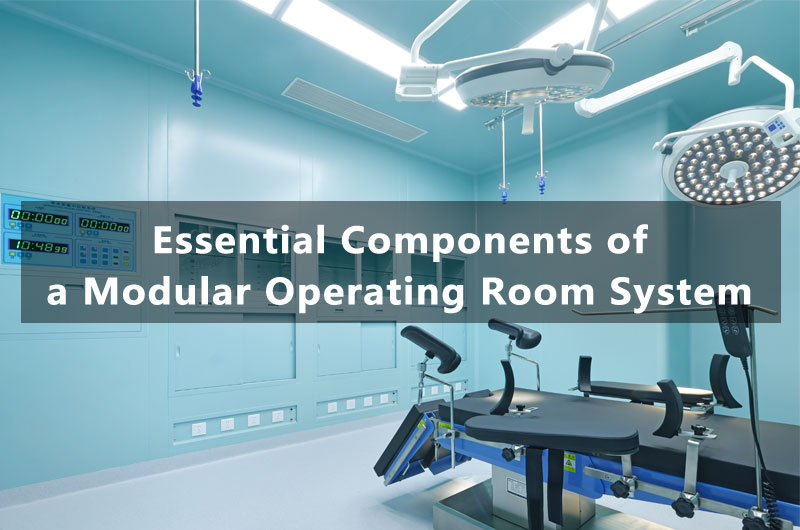
A modular operating room (OR) system combines architectural elements, medical infrastructure, environmental control systems, and digital technologies to support surgical procedures.
Understanding the essential components of a modular operating room helps healthcare planners, engineers, and hospital administrators design operating environments that meet modern clinical standards.
The following elements are the core components that form the foundation of a modular operating room system.
1. Modular Wall and Ceiling Panels
The structural backbone of a modular operating room is the prefabricated wall and ceiling panel system. These panels are usually made from stainless steel or other hygienic materials with antimicrobial coatings. Their surfaces are smooth, seamless, and easy to clean, helping maintain strict infection control standards.
Modular panels serve several critical purposes:
- Provide a sealed and sterile enclosure
- Maintain temperature and humidity control
- Prevent microbial growth
- Allow quick installation and future reconfiguration
Because these panels are modular, hospitals can easily modify or expand the operating room without major reconstruction, making them ideal for evolving medical facilities.
2. Laminar Airflow and HVAC System
Air quality control is one of the most important aspects of an operating room. Modular OR systems use laminar airflow technology and specialized HVAC systems to ensure the surgical area remains sterile.
Laminar airflow systems supply high-efficiency filtered air in a uniform downward flow, which removes airborne bacteria and contaminants from the surgical zone.
Key features of this system include:
- HEPA filtration for particle removal
- Positive air pressure to prevent contamination
- Controlled airflow patterns
- Temperature and humidity regulation
By constantly circulating filtered air, the HVAC system reduces infection risks and maintains a stable environment suitable for complex surgeries.
3. Hermetically Sealed Doors
Another critical component of modular operating rooms is the hermetically sealed sliding door system. These doors are designed to maintain stable air pressure and minimize the risk of external contamination.
Hermetic doors typically feature:
- Automatic sliding mechanisms
- Airtight sealing gaskets
- Smooth surfaces for easy cleaning
- Emergency manual operation during power failures
Because operating rooms rely on carefully controlled airflow, hermetic doors help maintain pressure differentials between sterile and non-sterile areas, ensuring that contaminants do not enter the surgical space.
4. Surgical Lighting System
Adequate lighting is essential for surgical accuracy and safety. Modular operating rooms are equipped with high-intensity surgical lighting systems, usually mounted on the ceiling.
A surgical light system is designed to provide focused illumination of the surgical site, allowing surgeons to clearly see anatomical structures during procedures.
Modern surgical lighting systems often include:
- LED light sources
- Adjustable intensity
- Shadow-free illumination
- Flexible positioning arms
These lights ensure consistent brightness and color accuracy, which is vital for identifying tissues and blood vessels during surgery.
5. Operating Room Control Panel
The integrated control panel acts as the central command center of a modular operating room. It allows medical staff to monitor and control various environmental and operational parameters from a single interface.
Typical functions include:
- Temperature and humidity monitoring
- Air pressure control
- Medical gas system monitoring
- Lighting control
- Clock and timer display
- Alarm systems
Some advanced control panels also include touchscreen displays and digital interfaces that connect with hospital information systems.
This centralized control improves efficiency and reduces the need for staff to move around the operating room during procedures.
6. Surgical Pendants and Equipment Booms
Surgical pendants or equipment booms are ceiling-mounted systems designed to support and organize medical equipment.
These systems typically provide:
- Medical gas outlets
- Electrical power sockets
- Data and communication ports
- Shelves for surgical devices
- Mounting points for monitors and equipment
Pendants keep cables and equipment off the floor, improving safety and reducing clutter in the operating room. They also allow staff to position equipment conveniently around the surgical table.
7. Medical Gas Pipeline System
The medical gas pipeline system supplies essential gases used during surgical procedures. These gases include oxygen, nitrous oxide, compressed air, and vacuum suction.
The system is connected to outlets mounted on pendants or wall panels, ensuring easy access for anesthesia machines and other equipment.
A properly designed medical gas system ensures:
- Continuous gas supply during surgery
- Safe gas pressure control
- Integration with alarm systems
8. Anti-Static and Anti-Bacterial Flooring
The flooring used in modular operating rooms must meet strict hygiene and safety requirements. Anti-static and antibacterial flooring systems are commonly used to reduce contamination and prevent static electricity buildup.
Important characteristics include:
- Seamless and non-porous surface
- Chemical resistance
- Slip resistance
- Easy cleaning and sterilization
These floors help maintain a sterile environment while also ensuring safety for medical staff and equipment.
9. Integrated OR Technology and Communication Systems
Modern modular operating rooms increasingly incorporate integrated digital technologies. These systems connect surgical equipment, displays, and hospital networks to improve workflow and collaboration.
Integrated OR systems can include:
- Surgical video recording and display systems
- Real-time imaging access
- Touchscreen display panels
- Communication systems for remote consultation
OR integration allows surgeons to access patient data, imaging results, and surgical videos without leaving the sterile field. It also enables collaboration with specialists outside the operating room.
10. Essential Surgical Equipment
Finally, a modular operating room must include essential surgical equipment necessary for performing procedures.
Common examples include:
- Operating table
- Anesthesia machine
- Patient monitoring systems
- Surgical instruments
- Defibrillators and emergency equipment
The operating table is particularly critical because it allows precise patient positioning to provide optimal access to the surgical site.
Together, these devices support the surgical team in performing safe and efficient procedures.
Conclusion
A modular operating room system represents a modern approach to surgical infrastructure. By combining prefabricated construction techniques with advanced medical technology, modular ORs provide hospitals with a flexible, hygienic, and highly efficient surgical environment.
The essential components of a modular operating room include:
- Modular wall and ceiling panels
- Laminar airflow and HVAC systems
- Hermetically sealed doors
- Surgical lighting systems
- Integrated control panels
- Surgical pendants and equipment booms
- Medical gas pipeline systems
- Anti-static flooring
- Integrated digital technologies
- Essential surgical equipment