
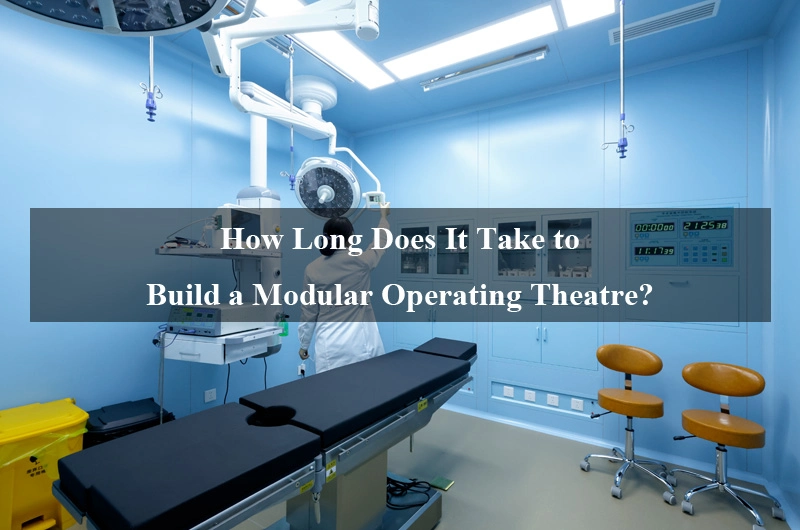
For hospitals, EPC contractors, and healthcare developers, time is often one of the most critical factors in healthcare construction projects.
Whether it is a new hospital expansion, a surgical center upgrade, or an emergency healthcare project, reducing construction time can significantly improve operational efficiency and patient care capacity.
This is one of the key reasons why modular operating theatres are becoming increasingly popular worldwide.
Compared with traditional operating room construction, modular OT systems offer much faster installation, easier project management, and shorter hospital downtime.
But one common question remains:
“How long does it take to build a modular operating theatre?”
The answer depends on project size, customization level, site conditions, and technical requirements.
Typical Timeline for a Modular Operating Theatre Project
A standard modular operating theatre project usually includes the following stages:
| Project Stage | Estimated Time |
|---|---|
| Requirement Discussion & Planning | 1–3 Days |
| Design & Drawing Confirmation | 2–5 Days |
| Manufacturing & Material Preparation | 5–10 Days |
| Shipping & Site Preparation | Depends on location |
| On-Site Installation | 3–7 Days |
| Testing & Commissioning | 1–2 Days |
For urgent projects with standardized configurations, the entire process can sometimes be completed within two weeks.
Why Modular Operating Theatres Are Faster Than Traditional Construction
Traditional operating room construction often requires multiple contractors, long construction cycles, and complex on-site work.
Conventional OT construction may involve:
- Brick and cement work
- Painting
- Welding
- Ceiling construction
- HVAC coordination
- Electrical modifications
- Long curing and finishing times
As a result, traditional operating theatre projects can take several months to complete.
Modular operating theatres are different because most components are prefabricated in the factory before arriving at the project site.
This approach significantly reduces:
- On-site labor
- Construction complexity
- Installation errors
- Project delays
As a result, hospitals can start operating much faster.
Step-by-Step Modular OT Construction Process
1. Requirement Analysis and Project Planning
The first step is understanding the hospital’s requirements.
This includes:
- OT room size
- Surgical specialty
- Cleanroom classification
- HVAC requirements
- Medical gas system layout
- Electrical system planning
- Workflow requirements
An experienced modular OT manufacturer will work closely with the hospital or EPC contractor to finalize the project scope quickly and efficiently.
Estimated Time: 1–3 Days
2. Design and Technical Drawing
Once project requirements are confirmed, the engineering team prepares:
- OT layout drawings
- Ceiling plans
- Wall panel design
- HVAC airflow planning
- Medical gas routing
- Electrical system design
Modern modular OT manufacturers often use CAD and 3D design tools to speed up the approval process.
Since modular systems are based on standardized engineering principles, design work can usually be completed much faster than traditional hospital construction projects.
Estimated Time: 2–5 Days
3. Factory Manufacturing
After drawing approval, manufacturing begins in the factory.
Major components produced include:
- Wall panels
- Ceiling panels
- Hermetic doors
- Observation windows
- Stainless steel furniture
- Control panels
- Airflow systems
Factory production offers several advantages:
- Better quality control
- Faster production speed
- Reduced material waste
- Consistent manufacturing standards
Because manufacturing takes place simultaneously with site preparation, the overall project timeline is greatly reduced.
Estimated Time: 5–10 Days
4. Site Preparation
While the modular components are being manufactured, the hospital site can prepare for installation.
Typical site preparation includes:
- Power supply setup
- HVAC connections
- Floor preparation
- Utility access
- Structural verification
This parallel workflow helps save significant project time.
5. On-Site Installation
Once the materials arrive on-site, the modular OT installation process begins.
Installation usually includes:
- Wall panel assembly
- Ceiling installation
- Door installation
- HVAC integration
- Medical gas connection
- Electrical wiring
- Built-in furniture installation
Because the components are prefabricated and pre-engineered, installation is much cleaner and faster compared to traditional construction.
Estimated Time: 3–7 Days
6. Testing and Commissioning
After installation is complete, the system undergoes testing and validation.
This may include:
- Airflow testing
- Pressure testing
- HEPA filter testing
- Lighting inspection
- Medical gas leakage testing
- Electrical safety checks
Once testing is completed, the operating theatre is ready for use.
Estimated Time: 1–2 Days
Factors That Affect Modular OT Construction Time
Although modular operating theatres are significantly faster to build than traditional operating rooms, the actual project timeline can still vary depending on several important factors.
Understanding these factors helps hospitals, EPC contractors, and healthcare developers plan their projects more efficiently and avoid unnecessary delays.
1. Project Complexity and Technical Requirements
The complexity of the operating theatre is one of the biggest factors affecting construction time.
A standard general surgery OT can usually be completed much faster than a highly specialized operating room that includes advanced medical systems.
Projects involving the following features often require additional engineering and installation time:
- Hybrid operating room integration
- Advanced imaging systems
- Digital control systems
- Specialized HVAC requirements
- Higher cleanroom classifications
- Complex medical gas layouts
- Integrated surgical communication systems
The more technically advanced the operating theatre is, the more coordination, testing, and commissioning will be required.
2. Level of Customization
Every hospital project is different.
Some hospitals choose standardized modular OT configurations for faster delivery, while others require fully customized layouts based on specific surgical workflows or architectural conditions.
Customized projects may involve:
- Non-standard room dimensions
- Special wall panel materials
- Custom-built stainless steel furniture
- Specialized lighting systems
- Unique airflow designs
- Additional storage or integrated equipment
Although modular systems are highly flexible, extensive customization may increase engineering and production time.
3. Design Approval Process
The speed of design approval can significantly impact the overall project schedule.
Before manufacturing begins, the hospital or EPC contractor usually needs to review and approve:
- Layout drawings
- Ceiling plans
- HVAC designs
- Medical gas routing
- Electrical systems
- Equipment positioning
Delays in communication, repeated design revisions, or incomplete technical information can extend the project timeline.
Working with an experienced modular OT manufacturer can help accelerate this process through professional engineering coordination and efficient technical support.
4. Manufacturing Capacity and Material Availability
Factory production plays a major role in modular OT delivery speed.
Manufacturing timelines can be affected by:
- Production scheduling
- Material inventory
- Custom component fabrication
- Project size
- Supply chain conditions
Manufacturers with strong production capacity, standardized processes, and stable material supply chains are usually able to deliver projects much faster.
For urgent hospital projects, experienced manufacturers can often prioritize production and reduce lead times significantly.
5. Site Conditions and Civil Readiness
Even if the modular components are ready, installation cannot begin unless the construction site is properly prepared.
Site readiness may include:
- Floor leveling
- Structural preparation
- Power supply access
- HVAC connection points
- Medical gas pipeline preparation
- Drainage systems
- Utility coordination
Unexpected site problems can cause installation delays, especially in renovation projects where existing hospital structures may require modification.
Proper site inspection and early coordination are essential for maintaining fast project timelines.
6. International Shipping and Logistics
For overseas projects, logistics and transportation are important considerations.
Project schedules may be influenced by:
- Shipping method
- Customs clearance
- Port congestion
- Local transportation
- Import regulations
- Weather conditions
Efficient packaging, shipping coordination, and international project experience can help minimize delays during transportation.
Experienced modular OT manufacturers usually have established export procedures that improve delivery efficiency for international healthcare projects.
7. Installation Team Experience
The efficiency of on-site installation largely depends on the professionalism and experience of the installation team.
Experienced installation engineers can:
- Assemble systems faster
- Reduce installation errors
- Improve coordination
- Complete testing more efficiently
- Solve on-site problems quickly
A skilled installation team is especially important for overseas projects where construction conditions may be more challenging.
8. Testing and Validation Requirements
Before the operating theatre becomes operational, all systems must undergo testing and validation.
This may include:
- HEPA filter integrity testing
- Airflow velocity testing
- Room pressure testing
- Lighting inspection
- Electrical safety testing
- Medical gas leakage testing
- Cleanliness verification
Projects with stricter validation requirements or higher cleanroom classifications may require additional commissioning time.
However, proper testing is essential for ensuring patient safety and compliance with healthcare standards.
9. Coordination Between Multiple Parties
Hospital construction projects often involve multiple stakeholders, including:
- Hospital management
- EPC contractors
- Architects
- Biomedical engineers
- HVAC contractors
- Medical equipment suppliers
Poor coordination between different parties can create delays during design, installation, and commissioning.
An experienced turnkey modular OT supplier can help simplify communication and improve overall project efficiency.
Conclusion
The speed and quality of a modular OT project heavily depend on the manufacturer’s engineering and project management capabilities.
As a professional modular OT manufacturer from China, we provide complete turnkey operating theatre solutions, including design, manufacturing, installation, and technical support for hospitals and healthcare projects worldwide.
- Faster design response
- Standardized engineering systems
- Efficient manufacturing
- Professional installation support
- International project experience
- Better quality control
For overseas healthcare projects, working with a professional turnkey modular OT supplier is especially important for reducing risks and ensuring smooth project execution.