
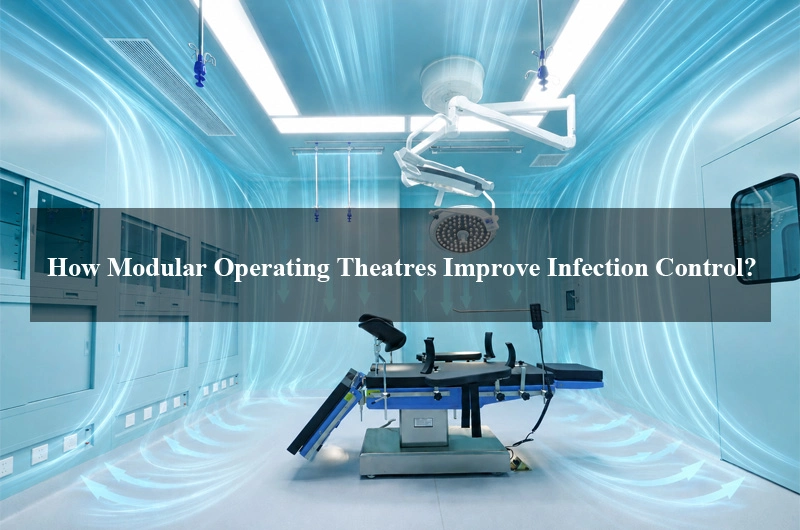
Infection control is one of the most critical priorities in modern healthcare facilities.
To reduce contamination and maintain sterile conditions, hospitals are increasingly adopting modular operating theatre systems.
Unlike traditional operating theatres, modular operating theatres are specifically designed with infection control in mind.
Through advanced cleanroom engineering, controlled airflow systems, and hygienic construction materials, modular OTs help hospitals create safer surgical environments and improve patient outcomes.
Why Infection Control Matters in Operating Theatres
During surgery, patients are particularly vulnerable to infection because surgical procedures expose internal tissues and organs to the surrounding environment.
Sources of contamination may include:
- Airborne particles
- Microorganisms
- Medical staff movement
- Surgical equipment
- Inadequately cleaned surfaces
- Poor ventilation systems
Even a small amount of contamination can increase the risk of surgical site infections.
For this reason, operating theatres must be designed to maintain strict environmental control throughout every surgical procedure.
Modular Operating Theatres and Cleanroom Design
A modular operating theatre is built using prefabricated cleanroom components specifically designed to create a highly controlled surgical environment.
These systems integrate:
- Antibacterial wall panels
- Airtight ceiling systems
- Hermetic OT doors
- Laminar airflow units
- HEPA filtration systems
- Integrated HVAC controls
Together, these components help minimize contamination risks and maintain cleanroom performance.
Unlike traditional construction methods, modular systems are engineered from the beginning to support infection prevention.
Hygienic Wall Systems
One of the key advantages of modular operating theatres is the use of hygienic wall panel systems.
Traditional operating rooms often contain joints, cracks, and surface irregularities where dust and bacteria can accumulate.
Modular OT wall systems are designed to provide:
- Smooth surfaces
- Minimal joints
- Easy cleaning
- Chemical resistance
- Antibacterial properties
Materials commonly used include:
- Powder-coated steel panels
- Stainless steel panels
- Antibacterial HPL panels
These hygienic surfaces help reduce microbial growth and simplify cleaning procedures.
Laminar Airflow Systems
Airborne contamination is one of the most significant infection risks in operating rooms.
To address this challenge, modular operating theatres often incorporate laminar airflow systems.
Laminar airflow creates a controlled stream of filtered air that moves uniformly downward over the surgical area.
Benefits include:
- Continuous removal of airborne particles
- Reduced bacterial contamination
- Improved air cleanliness
- Enhanced protection of the surgical field
The surgical zone directly beneath the laminar airflow canopy is typically designed to meet strict cleanroom standards, helping maintain sterile operating conditions.
HEPA Filtration for Air Purification
High-Efficiency Particulate Air (HEPA) filters are essential components of modern modular OT systems.
HEPA filters remove microscopic airborne contaminants before air enters the operating theatre.
A properly installed HEPA filtration system can capture:
- Dust particles
- Bacteria
- Fungal spores
- Airborne contaminants
This significantly improves indoor air quality and helps maintain compliance with global cleanroom standards.
Regular filter maintenance and testing ensure long-term filtration performance.
Positive Pressure Ventilation
Maintaining positive pressure is another important infection control strategy.
In a positive-pressure operating theatre, air pressure inside the OT is higher than in adjacent areas.
This pressure differential prevents contaminated air from entering the operating room when doors are opened.
Benefits include:
- Reduced contamination risk
- Improved air cleanliness
- Enhanced protection of sterile environments
Positive pressure systems are widely used in modern modular operating theatres to support infection prevention protocols.
Hermetic Doors and Airtight Construction
Air leakage can compromise infection control performance by allowing contaminants to enter the operating theatre.
Modular OTs use hermetic doors and airtight construction techniques to maintain environmental control.
Key features include:
- Automatic sealing doors
- Airtight wall joints
- Sealed ceiling systems
- Controlled pressure zones
These design elements help maintain cleanroom integrity and improve airflow management.
Flush-Mounted Equipment and Furniture
In traditional operating rooms, protruding equipment and exposed fixtures can create difficult-to-clean areas.
Modular operating theatres often use flush-mounted designs for:
- Storage cabinets
- Control panels
- Observation windows
- Medical service units
This approach reduces dust accumulation and improves cleaning efficiency.
By minimizing exposed surfaces and hard-to-reach corners, hospitals can maintain higher hygiene standards.
Easy Cleaning and Maintenance
Routine cleaning is essential for preventing infection in surgical environments.
Modular operating theatres are designed to simplify cleaning procedures through:
- Smooth surfaces
- Rounded corners
- Chemical-resistant materials
These features reduce cleaning time and help housekeeping staff maintain sterile conditions more effectively.
In addition, damaged panels can often be replaced individually without extensive renovation work.
Compliance with International Cleanroom Standards
Many modular operating theatres are designed to comply with international cleanroom standards such as:
- ISO 14644
- HTM guidelines
- Healthcare facility regulations
Compliance ensures that operating theatres meet strict requirements for:
- Air cleanliness
- Airflow performance
- Particle control
- Environmental monitoring
These standards provide hospitals with confidence that their surgical environments support effective infection prevention.
Conclusion
Infection control is a fundamental requirement for every operating theatre, and modular operating theatres are specifically engineered to support the highest standards of surgical hygiene.
Through features such as:
- Hygienic antibacterial surfaces
- Laminar airflow systems
- HEPA filtration
- Positive pressure ventilation
- Airtight construction
- Flush-mounted equipment
modular OTs create highly controlled environments that help reduce contamination risks and improve patient safety.