
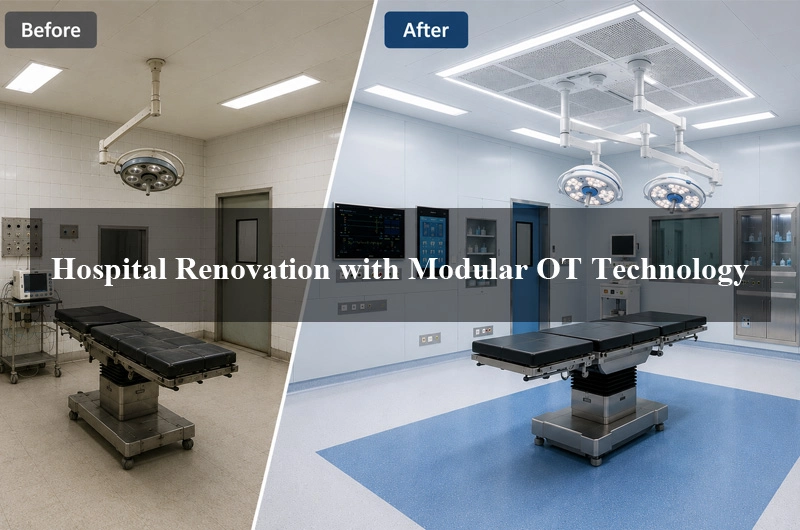
Traditional hospital renovation methods are often time-consuming, expensive, and disruptive to daily medical operations. As a result, more hospitals are turning to modular operating theatre (modular OT) technology as a faster, cleaner, and more efficient renovation solution.
In this article, we explore how modular OT technology is transforming hospital renovation projects and why it has become a preferred choice for modern healthcare infrastructure upgrades.
What Is Modular OT Technology?
Modular OT technology refers to the use of prefabricated and integrated operating theatre systems designed specifically for modern surgical environments.
Unlike traditional construction methods, modular operating theatres are built using factory-manufactured components such as:
- Antibacterial wall panels
- Modular ceiling systems
- Hermetic OT doors
- Laminar airflow units
- Medical gas systems
- Integrated control panels
- Built-in stainless steel furniture
These components are assembled on-site to create a highly sterile, efficient, and customizable surgical environment.
Because the systems are prefabricated, modular OT technology is especially suitable for hospital renovation projects where speed, cleanliness, and operational continuity are critical.
Why Hospitals Need Renovation
Many hospitals today are facing challenges caused by aging infrastructure and outdated operating rooms.
Common problems include:
- Poor infection control
- Damaged wall surfaces
- Outdated HVAC systems
- Inadequate airflow management
- Difficult cleaning and maintenance
- Insufficient electrical and medical gas systems
- Lack of digital integration
- Inefficient surgical workflow
As healthcare standards continue to evolve, hospitals must modernize their operating theatres to improve patient safety and surgical performance.
Challenges of Traditional Hospital Renovation
Renovating a hospital operating theatre using traditional construction methods can be extremely complex.
Common challenges include:
- Long construction timelines
- High labor costs
- Dust and contamination risks
- Noise disruption
- Extended operating room downtime
- Difficulty upgrading hidden infrastructure
- Interruption of hospital operations
In busy hospitals, shutting down operating theatres for long periods can lead to significant financial and operational losses.
This is why modular OT technology has become an attractive alternative.
Advantages of Hospital Renovation with Modular OT Technology
Modular operating theatre systems offer several important advantages for hospital renovation projects.
1. Faster Installation and Reduced Downtime
One of the biggest benefits of modular OT technology is rapid installation.
Since most components are prefabricated in factories, on-site construction time is significantly reduced.
Hospitals can:
- Complete renovations faster
- Minimize surgical service interruptions
- Reduce project delays
- Resume operations more quickly
This is especially important for hospitals with high surgical demand.
2. Better Infection Control During Renovation
Traditional construction often generates dust and airborne particles that may affect nearby clinical areas.
Modular renovation systems help reduce contamination risks because:
- Components arrive pre-finished
- Less cutting and welding are required on-site
- Cleaner installation methods are used
- Airtight systems improve sterile control
This helps hospitals maintain safer environments during renovation work.
3. Improved Hygiene and Cleanability
Modern modular OT systems are designed specifically for infection prevention.
Features include:
- Seamless wall surfaces
- Antibacterial coatings
- Rounded corners
- Flush-mounted equipment
- Easy-to-clean materials
These design improvements help hospitals maintain higher hygiene standards and reduce the risk of surgical site infections.
4. Easy Integration with Existing Hospital Infrastructure
Modular OT systems can often be integrated into existing hospital buildings without major structural modifications.
This flexibility allows hospitals to upgrade:
- Wall systems
- Ceiling systems
- HVAC systems
- Medical gas pipelines
- Electrical systems
without completely rebuilding the operating department.
5. Flexible Customization
Every hospital renovation project has unique requirements.
Modular OT technology allows customized solutions based on:
- Surgical specialty
- Room dimensions
- Workflow requirements
- Budget limitations
- Future expansion plans
Hospitals can choose solutions that match their operational and clinical needs.
6. Easier Future Maintenance and Upgrades
Traditional operating rooms can be difficult and expensive to modify once construction is completed.
Modular systems are designed for easier maintenance and future upgrades.
Benefits include:
- Replaceable wall panels
- Accessible service areas
- Simplified equipment upgrades
- Lower maintenance costs
This flexibility helps hospitals adapt to future medical technologies and changing healthcare requirements.
Key Areas Upgraded During Modular OT Renovation
A hospital renovation project using modular OT technology typically includes several major upgrades.
Wall and Ceiling Systems
Old wall finishes are replaced with antibacterial modular panels that improve hygiene and aesthetics.
Modular ceilings provide support for:
- Laminar airflow systems
- OT lights
- Pendants
- HVAC integration
HVAC and Laminar Airflow Systems
Modern ventilation systems are essential for maintaining sterile surgical conditions.
Renovation projects often include:
- HEPA filtration
- Positive pressure systems
- Controlled airflow
- Temperature and humidity control
These upgrades help improve infection prevention and operating room performance.
Medical Gas and Electrical Systems
Older hospitals may have outdated medical gas and electrical infrastructure.
Modular renovation allows hospitals to upgrade:
- Oxygen outlets
- Vacuum systems
- Electrical panels
- Backup power systems
- Digital monitoring systems
to meet modern surgical requirements.
Integrated Control Panels
Digital OT control panels improve operational efficiency by centralizing room management functions such as:
- Lighting
- HVAC control
- Medical gas alarms
- Communication systems
- Room pressure monitoring
Modern smart OT integration is becoming increasingly popular in hospital renovation projects.
How to Plan a Successful Hospital OT Renovation
A successful modular OT renovation project requires careful planning and coordination.
Important considerations include:
Assessing Existing Infrastructure
Hospitals should evaluate:
- Structural conditions
- HVAC capacity
- Medical gas systems
- Electrical systems
- Space limitations
before starting renovation work.
Choosing the Right Modular OT Partner
Experienced modular OT suppliers can help hospitals:
- Optimize room design
- Reduce construction risks
- Improve installation efficiency
- Meet international healthcare standards
Selecting the right engineering partner is critical for project success.
Minimizing Operational Disruption
Hospitals should plan renovation schedules carefully to reduce the impact on daily medical operations.
Phased construction planning can help maintain continuous surgical services during renovation.