
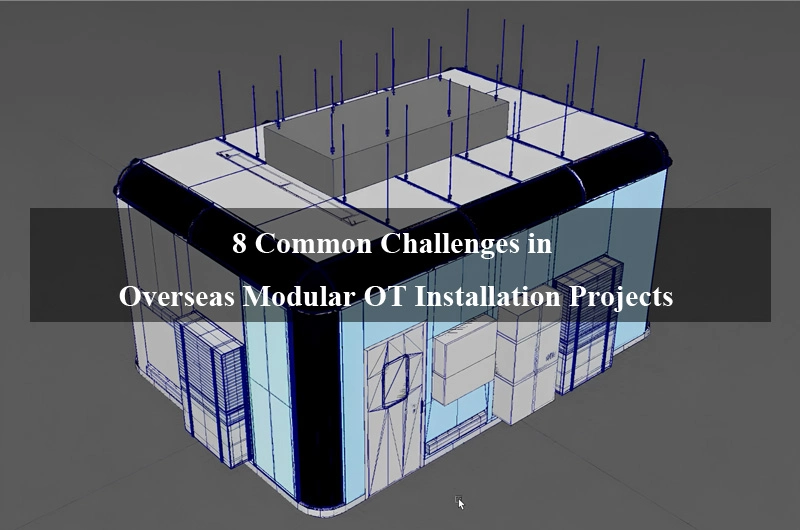
International modular OT projects are becoming increasingly common in regions such as Southeast Asia, Africa, the Middle East, and South America, where hospitals are upgrading surgical facilities to meet modern healthcare standards.
However, overseas operating theatre installation projects are far more complex than simply exporting products. A modular operating theatre is a highly integrated medical environment involving cleanroom engineering, HVAC systems, medical gas systems, electrical infrastructure, infection control standards, and precise installation procedures.
For Chinese modular OT manufacturers and healthcare engineering companies, overseas project execution often involves numerous technical, logistical, and management challenges.
In this article, we explore some of the most common challenges in overseas modular OT installation projects and how professional project management can help overcome them.
1. Installation Worker Visa Challenges
One of the most common problems in overseas modular OT projects is obtaining proper visas for installation engineers and technical workers.
In many countries, foreign companies may only receive:
- Business visas
- Short-term entry permits
instead of official engineering or construction work visas.
This creates several risks, including:
- Delayed project schedules
- Limited installation duration
- Legal compliance issues
- Restrictions on technical work
Visa approval procedures can also be slow and complicated, especially in developing regions or politically sensitive countries.
To minimize these risks, modular OT suppliers must prepare installation schedules early and work closely with local partners and clients on visa coordination.
2. National Security and Political Risks
Some overseas healthcare projects are located in regions facing political instability, armed conflict, or security concerns.
Potential risks may include:
- Political unrest
- Government instability
- Civil conflict
- Terrorism risks
- Currency restrictions
In certain countries, project progress may suddenly stop due to changes in political conditions or government regulations.
Before starting any overseas modular OT project, companies should carefully evaluate:
- Local political stability
- Security conditions
- Insurance coverage
- Emergency evacuation plans
Risk assessment is an essential part of international healthcare project management.
3. Disease and Public Health Risks
Healthcare infrastructure projects are often located in regions with challenging public health conditions.
Installation teams may face risks related to:
- Malaria
- Yellow fever
- Cholera
- Poor medical resources
Some countries also require mandatory vaccinations before entry.
Companies must ensure that overseas personnel receive:
- Proper vaccinations
- Health insurance
- Medical support plans
- Emergency healthcare arrangements
Protecting installation teams is critical for maintaining project continuity and workforce safety.
4. Language and Communication Barriers
Language barriers are another major challenge in overseas modular OT projects.
Technical communication problems may occur between:
- Chinese engineers
- Local contractors
- Hospital staff
- HVAC teams
- Electrical engineers
Misunderstandings during installation can lead to:
- Incorrect equipment positioning
- Airflow problems
- Engineering conflicts
- Project delays
This challenge becomes even more significant when dealing with highly technical systems such as:
- Laminar airflow systems
- HVAC balancing
- Medical gas systems
- Cleanroom pressure control
Professional project documentation, bilingual drawings, and experienced project coordinators can help improve communication efficiency.
5. Limited Local Construction Skills
In many overseas markets, local construction teams may have limited experience with modular operating theatre systems or cleanroom installations.
Common issues include:
- Improper panel installation
- Poor sealing performance
- Incorrect HVAC coordination
- Low airtightness quality
- Inadequate cleanroom practices
Because operating theatres require highly controlled environments, even small installation errors can affect infection control performance.
To ensure installation quality, many modular OT suppliers provide:
- On-site technical supervision
- Installation training
- Detailed SOP documentation
- Remote engineering support
Experienced project management is essential for maintaining international installation standards.
6. HVAC Coordination Difficulties
HVAC systems are among the most critical and technically demanding parts of operating theatre construction.
Proper airflow control is essential for:
- Infection prevention
- Air cleanliness
- Pressure balance
- Surgical safety
However, overseas projects often face HVAC challenges such as:
- Poor duct installation
- Air leakage
- Incorrect airflow balancing
- Limited local HVAC expertise
If HVAC systems are not properly coordinated, the operating theatre may fail cleanroom validation tests.
Successful modular OT projects require close coordination between HVAC engineers, cleanroom specialists, and installation teams throughout the project lifecycle.
7. Shipping and Logistics Delays
International logistics is another major challenge for overseas modular OT projects.
Modular operating theatre systems usually involve shipping:
- Wall panels
- Ceiling systems
- OT doors
- HVAC components
- Medical gas systems
- Stainless steel furniture
Projects may face delays caused by:
- Port congestion
- Customs clearance issues
- Container shortages
- Shipping damage
- Long transportation timelines
In some regions, poor local transportation infrastructure can create additional delivery challenges.
8. Project Management Challenges
Overseas healthcare projects involve multiple stakeholders located in different countries and time zones.
Project management difficulties may include:
- Delayed communication
- Coordination conflicts
- Frequent design changes
- Site preparation delays
- Remote supervision limitations
Because modular operating theatres involve multiple engineering systems, effective project coordination is critical for successful delivery.
Professional modular OT suppliers typically use:
- Detailed project schedules
- Technical coordination meetings
- Installation checklists
- Remote monitoring systems
- Dedicated project managers
to improve project control and reduce installation risks.
Conclusion
From worker visas and political risks to HVAC coordination and local construction challenges, successful overseas modular OT projects demand careful planning and professional execution.
For modular OT manufacturers and healthcare engineering companies, building strong overseas installation capabilities is becoming a key competitive advantage in the global healthcare infrastructure market.