
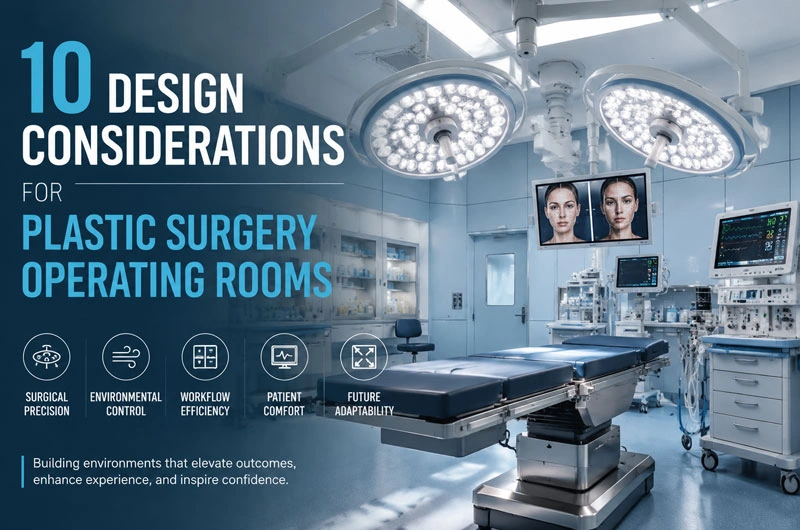
Plastic surgery is one of the most demanding surgical specialties in terms of operating room design. Unlike trauma or emergency surgery, aesthetic and reconstructive procedures often last several hours and require exceptional precision, stable environmental conditions, and a highly organized workspace.
Many hospitals focus on infection control and equipment selection, but high-performing plastic surgery operating rooms are designed around surgical precision, workflow efficiency, patient comfort, and future adaptability. A well-planned operating room not only improves surgical outcomes but also enhances surgeon performance and maximizes return on investment.
This article explores ten critical design considerations that are often overlooked when planning a modern plastic surgery operating room.
1. Prioritize Lighting That Supports Fine Aesthetic Work
Plastic surgery differs from many other specialties because surgeons frequently evaluate:
- Skin texture
- Tissue color
- Symmetry
- Small blood vessels
- Scar placement
Conventional surgical lighting may create glare or distort skin tones.
Recommended features
- Adjustable LED intensity
- High Color Rendering Index (CRI >95)
- Variable color temperature
- Minimal shadow generation
- Low heat emission
Some advanced centers also integrate ambient ceiling lighting, allowing surgeons to reduce eye fatigue during procedures lasting six to eight hours.
Unique insight:
Rather than maximizing brightness, plastic surgery lighting should maximize visual accuracy.
2. Design Around Surgeon Movement Instead of Equipment
Many operating rooms are designed by placing equipment first.
Plastic surgery centers often achieve better efficiency by mapping the surgeon’s workflow first.
Typical movement includes:
Patient positioning →
Instrument table →
Energy device →
Microscope or loupes →
Assistant →
Anesthesia station
Reducing unnecessary movement can:
| Benefit | Impact |
|---|---|
| Shorter procedures | Higher operating room utilization |
| Less surgeon fatigue | Better concentration |
| Reduced contamination risk | Improved infection control |
Modern workflow simulation software can identify unnecessary walking before construction begins.
3. Maintain Stable Environmental Conditions
Plastic surgery often involves implants, fat grafting, and delicate tissue handling.
Environmental fluctuations may affect:
- Sterility
- Tissue hydration
- Implant safety
- Patient comfort
Recommended parameters include:
| Parameter | Typical Range |
|---|---|
| Temperature | 20–24°C |
| Relative Humidity | 40–60% |
| Air Changes | 20–25 ACH |
| Pressure | Positive pressure |
| Filtration | HEPA H14 |
Unlike emergency surgery, plastic surgery often benefits from slightly warmer room temperatures during facial procedures to reduce patient heat loss.
4. Plan Equipment Integration Before Construction
One common mistake is purchasing equipment before finalizing the operating room layout.
Plastic surgery equipment often includes:
- Surgical microscope
- Liposuction systems
- Laser devices
- Electrosurgical units
- Endoscopic towers
- Camera systems
- Fat processing equipment
Each requires:
- Medical gas connections
- Electrical outlets
- Network ports
- Ceiling supports
- Cable routing
Early integration prevents:
- Extension cords
- Floor cables
- Future wall demolition
- Workflow congestion
5. Separate Clean and Dirty Workflows
Infection prevention is more than HEPA filtration.
The internal workflow should prevent crossover between:
- Sterile instruments
- Used instruments
- Waste
- Clean supplies
- Staff traffic
An ideal layout includes:
- Dedicated clean entry
- Dirty exit
- Separate sterilization support
- Clear storage zoning
Even small reductions in staff crossing paths can significantly improve workflow efficiency.
6. Optimize Storage for High Procedure Variety
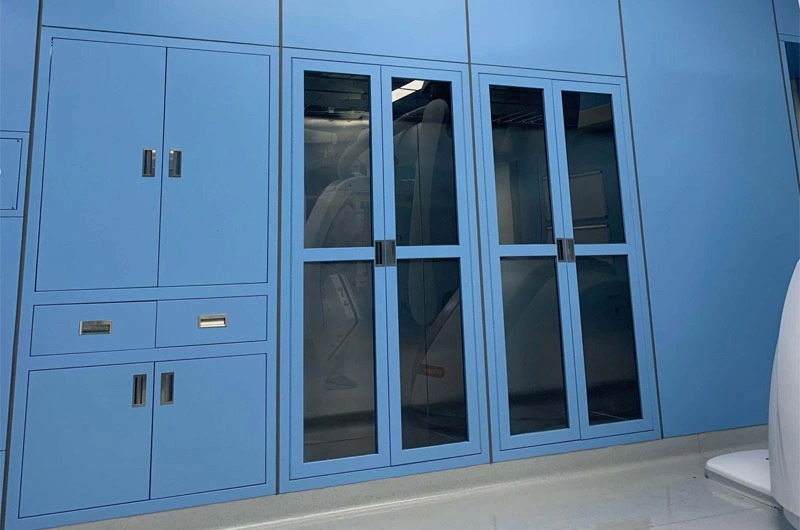
Plastic surgery performs a wide range of procedures:
- Rhinoplasty
- Blepharoplasty
- Breast augmentation
- Liposuction
- Abdominoplasty
- Facelift
- Reconstructive surgery
Each requires different:
- Instrument sets
- Implants
- Disposable supplies
- Energy device accessories
Modular storage systems make inventory easier to organize and reduce procedure preparation time.
Best practices include:
- Transparent inventory management
- Procedure-specific storage modules
- RFID inventory tracking
- Mobile instrument carts
7. Design Recovery Areas as Part of the Surgical Experience
Plastic surgery patients are usually awake shortly after surgery and often remain highly aware of their surroundings.
Recovery rooms should emphasize:
- Privacy
- Noise reduction
- Comfortable lighting
- Family access
- Individual monitoring
Unlike general surgical wards, aesthetic patients place greater importance on comfort and emotional reassurance.
A well-designed recovery space improves overall patient satisfaction while reducing anxiety.
8. Integrate Digital Documentation and Imaging
Plastic surgery relies heavily on photographic documentation.
Modern operating rooms increasingly integrate:
- Ceiling-mounted cameras
- 4K surgical recording
- PACS connectivity
- Electronic medical records
- Digital consent documentation
These systems support:
- Surgical planning
- Teaching
- Quality control
- Patient communication
- Marketing (with appropriate consent)
Future AI-assisted image analysis may further improve surgical planning and postoperative assessment.
9. Reduce Noise and Visual Distractions
Research shows that excessive operating room noise contributes to:
- Surgeon fatigue
- Communication errors
- Reduced concentration
Plastic surgery often requires prolonged periods of meticulous work.
Noise reduction strategies include:
- Quiet HVAC systems
- Acoustic wall panels
- Soft-closing cabinetry
- Organized cable management
- Ceiling-mounted equipment
Creating a calmer environment benefits both the surgical team and the patient.
10. Build Flexibility for Future Technologies
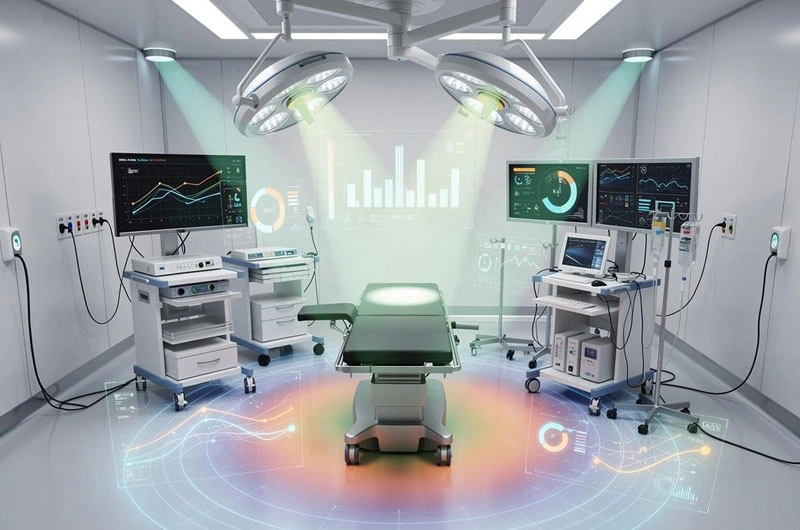
Plastic surgery technology evolves rapidly.
Today’s operating room may need to accommodate tomorrow’s innovations, including:
- Robotic-assisted procedures
- AI surgical planning
- Augmented reality navigation
- 3D imaging
- Automated documentation
- New laser platforms
Modular plastic surgery OR construction makes future upgrades significantly easier than conventional renovation.
Planning for adaptability today reduces lifecycle costs over the next 15–20 years.
Common Design Priorities
| Design Aspect | Why It Matters |
|---|---|
| Surgical lighting | Improves tissue visualization and aesthetic precision |
| Workflow layout | Reduces surgeon movement and procedure time |
| Environmental control | Supports sterility and patient safety |
| Equipment integration | Eliminates workflow bottlenecks |
| Clean/dirty separation | Minimizes contamination risk |
| Storage planning | Speeds preparation and improves organization |
| Recovery design | Enhances patient experience |
| Digital integration | Supports documentation and education |
| Noise reduction | Improves concentration and communication |
| Future-ready infrastructure | Simplifies technology upgrades |