
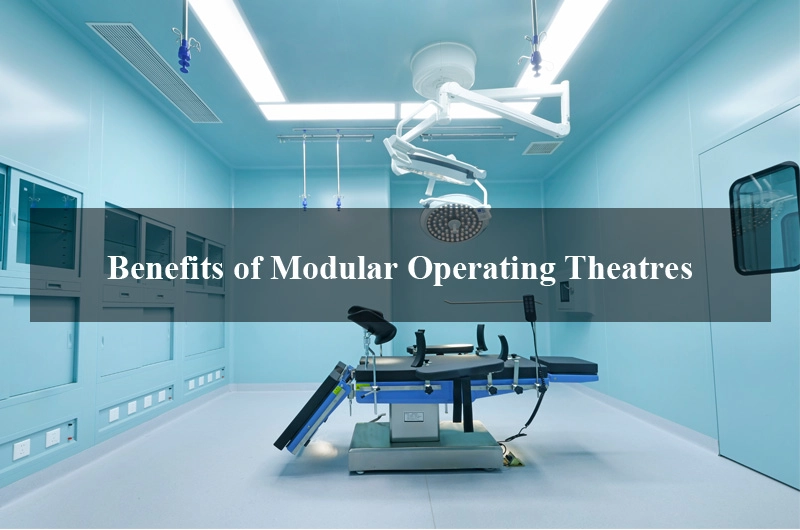
Traditional operating room construction often involves lengthy project timelines, high costs, and complex engineering coordination. To overcome these challenges, hospitals worldwide are increasingly adopting modular operating theatre systems.
Modular operating theatres combine cleanroom engineering, prefabricated construction, and integrated medical infrastructure to create efficient, hygienic, and future-ready surgical environments.
Key benefits of modular operating theatres include:
1. Superior Infection Control
One of the primary advantages of modular operating theatres is their ability to maintain highly sterile surgical environments.
Modern modular OT systems are specifically designed to reduce the risk of contamination through features such as:
- Seamless wall surfaces
- Antibacterial materials
- Rounded corners
- Flush-mounted equipment
- Airtight construction
- Laminar airflow systems
These design elements help minimize dust accumulation, bacterial growth, and airborne contamination.
Improved infection control contributes directly to reducing surgical site infections (SSI) and improving patient outcomes.
2. Faster Installation and Project Completion
Traditional operating room construction can take several months due to extensive on-site work and coordination among multiple contractors.
Modular operating theatres significantly reduce construction timelines because major components are prefabricated in controlled factory environments.
Benefits include:
- Reduced on-site labor
- Faster assembly
- Less construction waste
- Shorter project schedules
This is especially valuable for hospitals that need to expand surgical capacity quickly or renovate existing facilities with minimal disruption.
3. Cost Efficiency
Hospital construction projects often face budget pressures and cost overruns.
Modular operating theatres help improve cost control by:
- Reducing labor requirements
- Minimizing construction delays
- Lowering maintenance costs
- Reducing material waste
- Improving project predictability
Although the initial investment may vary depending on project specifications, modular OT systems often provide lower life-cycle costs compared to traditional construction methods.
4. Flexible Design and Customization
Every hospital has unique surgical requirements.
Modular operating theatres can be customized according to:
- Surgical specialties
- Room dimensions
- Workflow requirements
- Hospital standards
- Future expansion plans
Whether designed for general surgery, orthopedics, cardiac procedures, neurosurgery, or hybrid operating rooms, modular systems offer flexibility to meet specific clinical needs.
5. Improved HVAC and Airflow Performance
Maintaining proper air quality is critical in surgical environments.
Modular operating theatres are designed with advanced HVAC integration that supports:
- Laminar airflow systems
- HEPA filtration
- Positive pressure control
- Temperature regulation
- Humidity management
These systems help maintain cleanroom conditions and support compliance with international healthcare standards.
Proper airflow design improves infection prevention and enhances overall surgical safety.
6. Easy Maintenance and Cleaning
Operating theatres require frequent cleaning and maintenance to maintain hygiene standards.
Modular OT systems use materials that are:
- Easy to clean
- Chemical resistant
- Corrosion resistant
- Durable under frequent disinfection
Smooth, seamless surfaces reduce areas where dirt and bacteria can accumulate.
Additionally, modular components can often be replaced individually without requiring extensive renovation, thereby reducing maintenance costs and downtime.
7. Better Aesthetics and Professional Appearance
Modern hospitals place increasing emphasis on patient confidence and professional healthcare environments.
Modular operating theatres provide:
- Clean architectural finishes
- Integrated equipment design
- Organized workflow layouts
- Modern appearance
A well-designed operating room not only improves functionality but also reflects the hospital’s commitment to quality healthcare.
8. Simplified Future Upgrades
Medical technology continues to evolve rapidly.
Hospitals often need to upgrade:
- Surgical equipment
- Imaging systems
- Digital control systems
- Medical gas infrastructure
- HVAC systems
Traditional operating rooms may require significant reconstruction to accommodate these changes.
Modular OT systems are designed with flexibility in mind, making future upgrades and modifications much easier.
This helps hospitals protect their long-term infrastructure investments.
9. Ideal for Hospital Renovation Projects
Many hospitals worldwide are upgrading aging operating theatres rather than constructing entirely new facilities.
Modular operating theatres are particularly suitable for renovation projects because they:
- Require less demolition
- Generate less construction dust
- Reduce disruption to hospital operations
- Shorten renovation timelines
Hospitals can modernize surgical facilities while continuing to provide essential healthcare services.
10. Support for Sustainable Healthcare Infrastructure
Sustainability is becoming an important consideration in healthcare construction.
Modular operating theatres support sustainable development by offering:
- Reduced construction waste
- Efficient material usage
- Energy-efficient HVAC systems
- Longer service life
- Easier maintenance
Prefabricated construction also minimizes environmental impact compared to conventional building methods.
11. Compliance with International Healthcare Standards
Modern modular OT systems can be designed to comply with various international standards related to:
- Cleanroom performance
- HVAC requirements
- Infection control
- Medical gas systems
- Electrical safety
Compliance with recognized standards helps hospitals improve operational reliability and meet accreditation requirements.