
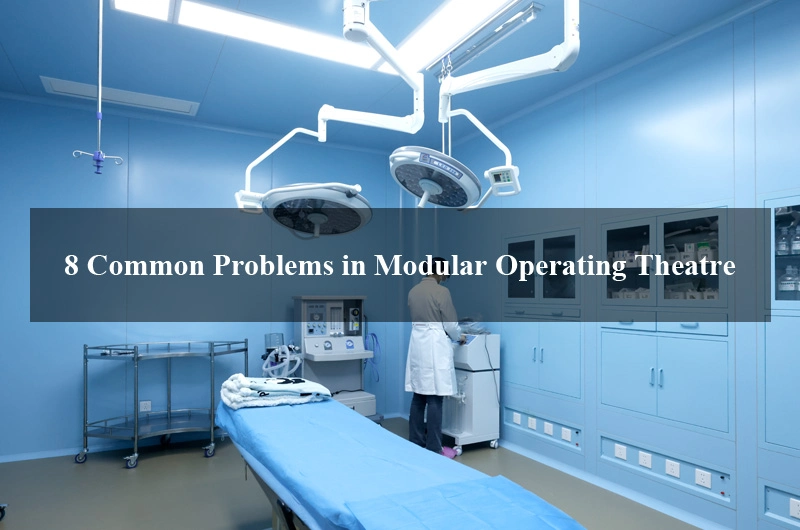
Like any complex healthcare engineering system, modular operating theatres may experience operational or installation-related problems if design, construction, HVAC coordination, or maintenance are not properly managed.
A clear understanding of these common challenges, their underlying causes, and the most effective solutions is critical for hospitals, EPC contractors, and modular OT manufacturers.
1. Air Leakage and Poor Airtightness
Air leakage is one of the most common and serious issues in modular operating theatres.
Poor airtightness can lead to:
- Pressure imbalance
- Air contamination
- Reduced infection control performance
- Failure of cleanroom validation tests
Common Causes
- Improper wall panel installation
- Poor sealing between joints
- Low-quality hermetic doors
- Incorrect ceiling integration
- Damaged sealing materials
Solutions
To improve airtightness:
- Use high-quality modular wall systems
- Ensure professional installation
- Apply proper sealing materials
- Conduct pressure and leakage testing
- Use certified hermetic OT doors
Routine inspection and maintenance are also important for long-term cleanroom performance.
2. HVAC and Airflow Problems
HVAC systems are critical in maintaining sterile operating room conditions.
Poor airflow performance may cause:
- Uneven air distribution
- High particle concentration
- Pressure instability
- Surgical infection risks
Common Causes
- Incorrect HVAC design
- Improper airflow balancing
- Poor duct installation
- Inadequate HEPA filtration
- Obstructed laminar airflow
Solutions
Effective solutions include:
- Proper HVAC engineering design
- Airflow simulation during planning
- Regular HEPA filter maintenance
- Air balancing and commissioning
- Coordination between HVAC and OT layout design
Hospitals should also perform regular airflow validation tests to maintain operating room performance.
3. Panel Surface Damage and Corrosion
Operating theatre surfaces are exposed to frequent cleaning and aggressive disinfectants.
Over time, wall panels may experience:
- Surface scratches
- Corrosion
- Coating damage
- Staining
This affects both aesthetics and hygiene performance.
Common Causes
- Low-quality materials
- Improper cleaning chemicals
- Excessive moisture exposure
- Poor coating quality
Solutions
To improve durability:
- Use corrosion-resistant materials
- Select antibacterial coatings
- Apply proper cleaning procedures
- Avoid harsh chemical misuse
- Choose high-quality stainless steel or HPL systems
Preventive maintenance helps extend the service life of OT wall systems.
4. OT Door Malfunction
Hermetic OT doors are essential for maintaining airtightness and infection control.
Common issues include:
- Door alignment problems
- Failure to close properly
- Sensor malfunction
- Noise during operation
Common Causes
- Improper installation
- Poor-quality hardware
- Electrical issues
- Lack of maintenance
Solutions
Recommended solutions include:
- Professional installation and calibration
- Routine inspection of sensors and motors
- Regular lubrication and adjustment
- Using high-quality OT door systems
Proper maintenance reduces operational downtime and improves long-term reliability.
5. Condensation and Moisture Problems
Condensation inside operating theatres may lead to:
- Mold growth
- Material deterioration
- Corrosion
- Reduced hygiene standards
Common Causes
- Poor HVAC humidity control
- Thermal insulation failure
- Air leakage
- Incorrect temperature settings
Solutions
To prevent condensation:
- Maintain proper humidity control
- Improve insulation systems
- Ensure airtight installation
- Optimize HVAC performance
Environmental monitoring systems can help detect moisture problems early.
6. Medical Gas System Leakage
Medical gas systems are essential for surgical operations.
Gas leakage can create serious safety risks and operational failures.
Common Causes
- Poor pipe connections
- Low installation quality
- Damaged outlets
- Inadequate pressure testing
Solutions
Hospitals should ensure:
- Proper medical gas installation standards
- Pressure testing before commissioning
- Routine inspection and maintenance
- Certified medical gas components
7. Poor Lighting Performance
Insufficient or uneven surgical lighting may affect surgical precision and staff comfort.
Common Causes
- Incorrect light positioning
- Poor ceiling coordination
- Low-quality lighting systems
- Electrical instability
Solutions
Recommended solutions include:
- Proper OT lighting layout planning
- High-quality surgical lighting systems
- Stable electrical infrastructure
- Regular lighting maintenance
Lighting design should be coordinated during the early engineering stage.
8. Difficulty in Maintenance and Future Upgrades
Some modular operating theatres become difficult to maintain or upgrade after installation.
Common Causes
- Poor service access planning
- Non-standardized systems
- Overly complex infrastructure layout
Solutions
Modern modular OT systems should be designed with:
- Accessible maintenance zones
- Replaceable modular components
- Flexible engineering layouts
- Future equipment expansion capability
This improves long-term operational efficiency and reduces renovation costs.
Importance of Professional OT Engineering
Many modular OT problems are not caused by products themselves, but by poor engineering coordination, improper installation, or inadequate maintenance.
Successful modular OT projects require close collaboration between:
- OT manufacturers
- HVAC engineers
- Hospital planners
- Electrical engineers
- Medical gas specialists
- Installation teams
Professional project management is essential for achieving reliable and long-lasting operating theatre performance.