
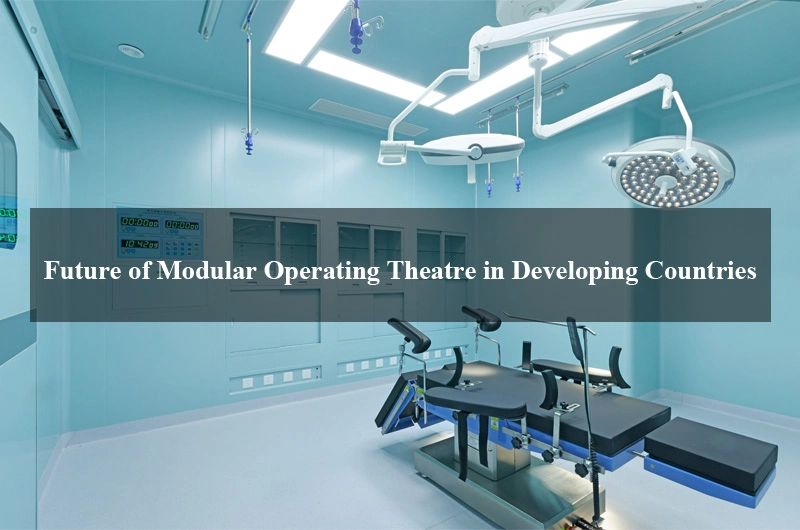
Healthcare infrastructure in developing countries is undergoing rapid transformation.
Governments, private healthcare groups, and international organizations are investing heavily in hospital modernization to improve patient care, increase surgical capacity, and strengthen healthcare systems.
However, many developing countries still face major healthcare challenges, including:
- Limited hospital infrastructure
- Shortage of advanced surgical facilities
- Rapid population growth
- Uneven healthcare access
- Aging hospitals
- Budget limitations
To address these challenges, modular healthcare infrastructure solutions are becoming increasingly important. Among them, modular operating theatre systems are emerging as one of the most promising technologies for the future of surgical infrastructure in developing regions.
By combining prefabricated construction, infection control engineering, and flexible hospital design, modular operating theatres offer a practical and scalable solution for modern healthcare development.
Growing Demand for Modern Surgical Infrastructure
As populations grow and urbanization accelerates, healthcare demand in developing countries continues to increase rapidly.
Many hospitals struggle with:
- Overcrowded surgical departments
- Outdated operating rooms
- Poor infection control
- Limited ICU capacity
- Insufficient healthcare technology
At the same time, governments are investing more in:
- Public healthcare expansion
- Regional medical centers
- Emergency healthcare systems
- Hospital modernization projects
This growing demand is creating strong opportunities for modular OT solutions.
Why Modular Operating Theatres Are Suitable for Developing Countries
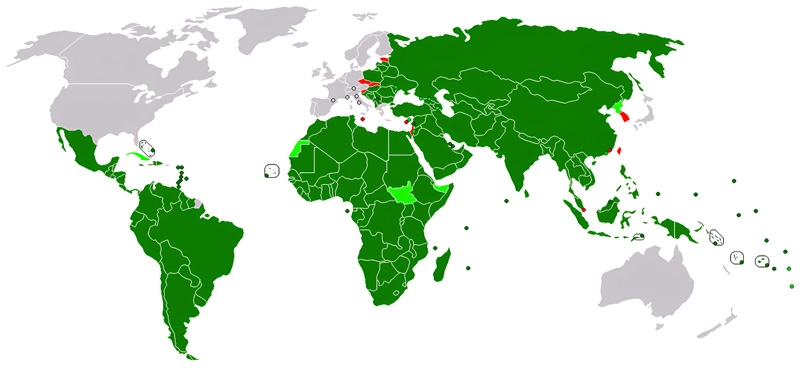
Traditional hospital construction projects are often expensive, slow, and difficult to manage in developing markets.
Modular operating theatres provide several important advantages that make them highly suitable for these regions.
Policy Incentives
Many developing countries are now receiving international financial and policy support to modernize healthcare infrastructure.
- Organizations such as the World Bank Health Program and the Asian Development Bank Health Sector Program are actively supporting healthcare infrastructure improvement projects across Asia, Africa, and other emerging regions.
- The World Bank Health Financing Initiative also helps governments develop healthcare financing strategies and infrastructure investment programs for long-term healthcare modernization.
- In Africa, the African Development Bank Quality Health Infrastructure Strategy 2022–2030 specifically emphasizes the need for modern healthcare infrastructure and hospital upgrades to address healthcare system gaps across the continent.
These international policy incentives and financing programs are expected to accelerate the adoption of modular healthcare infrastructure solutions, including modular operating theatres, in developing countries.
Faster Hospital Construction
One of the biggest benefits of modular OT systems is rapid installation.
Traditional operating room construction may take many months due to:
- Labor shortages
- Material delays
- Construction inefficiencies
- Poor site coordination
Modular OT systems use prefabricated components manufactured in factories and assembled on-site.
This significantly reduces:
- Construction time
- Site labor requirements
- Project delays
For developing countries with urgent healthcare needs, faster hospital delivery is extremely valuable.
Improved Infection Control
Hospital-acquired infections remain a major challenge in many developing healthcare systems.
Modular operating theatres are specifically designed to improve infection prevention through:
- Seamless antibacterial surfaces
- Laminar airflow systems
- HEPA filtration
- Positive pressure ventilation
- Airtight cleanroom construction
These features help hospitals create safer surgical environments and reduce infection risks.
As healthcare standards continue to improve globally, infection control will become increasingly important in developing regions.
Cost-Effective Healthcare Infrastructure
Budget limitations are a major concern for many hospitals in developing countries.
Compared to traditional construction, modular OT systems can help reduce:
- Construction waste
- Project delays
- Long-term maintenance costs
- Operational downtime
Prefabricated construction also improves project predictability and reduces costly rework during installation.
While modular operating theatres still require professional engineering and quality materials, they often provide better long-term value for healthcare infrastructure investment.
Flexible and Scalable Hospital Development
Healthcare demands in developing countries can change rapidly.
Hospitals may need to:
- Expand surgical departments
- Add specialty operating rooms
- Upgrade medical technologies
- Increase patient capacity
Modular OT systems provide flexibility because they can be:
- Customized
- Expanded
- Reconfigured
- Upgraded more easily
This adaptability supports long-term healthcare planning and future infrastructure expansion.
Support for Remote and Underserved Areas
Many developing countries face unequal healthcare distribution between urban and rural regions.
Remote areas often lack:
- Modern surgical facilities
- Advanced hospital infrastructure
- Specialized healthcare services
Modular operating theatres can help address this problem because they are suitable for:
- Regional hospitals
- Emergency healthcare projects
- Mobile surgical units
- Temporary healthcare facilities
Their faster installation process allows governments and healthcare organizations to improve surgical access more efficiently.
Increasing Adoption of Prefabricated Healthcare Construction
Developing countries are increasingly adopting prefabricated construction technologies due to their speed and efficiency.
This trend is especially strong in regions such as:
- Africa
- Southeast Asia
- The Middle East
- South America
Healthcare developers are recognizing that modular systems provide:
- Better project control
- Faster completion
- Improved quality consistency
- Easier logistics management
As infrastructure demand grows, modular healthcare construction is expected to become more common.
Challenges Facing Modular OT Development in Developing Countries
Despite its advantages, modular OT adoption in developing regions still faces several challenges.
These may include:
- Limited local technical expertise
- Inadequate HVAC engineering capacity
- Import regulations
- Logistics difficulties
- Budget constraints
- Political instability in some regions
In some countries, hospitals may also lack experience with cleanroom operating theatre systems and international healthcare standards.
To overcome these challenges, strong international project management and technical support are essential.
Role of International Healthcare Engineering Companies
International modular OT manufacturers and healthcare engineering companies are expected to play a major role in supporting healthcare development in emerging markets.
Professional suppliers can provide:
- Turnkey OT solutions
- Engineering design
- HVAC coordination
- Installation supervision
- Technical training
- After-sales support
Companies with overseas project experience are often better prepared to handle the complexities of healthcare infrastructure development in developing regions.
Sustainability and Long-Term Healthcare Planning
Sustainability is becoming an important consideration even in developing healthcare markets.
Modular operating theatres support sustainable healthcare development by offering:
- Reduced construction waste
- Faster installation
- Energy-efficient systems
- Longer infrastructure lifespan
- Easier future upgrades
As governments seek more efficient healthcare investment strategies, modular OT systems provide a practical long-term solution.
Future Outlook
The future of modular operating theatres in developing countries looks highly promising.
As healthcare demand continues to grow, hospitals will increasingly require:
- Faster infrastructure delivery
- Better infection control
- Flexible surgical environments
- Cost-effective healthcare solutions
Modular OT technology is well positioned to meet these needs.
With continued advancements in healthcare engineering, cleanroom technology, and prefabricated construction, modular operating theatres are expected to become a standard solution for modern surgical infrastructure in emerging healthcare markets worldwide.